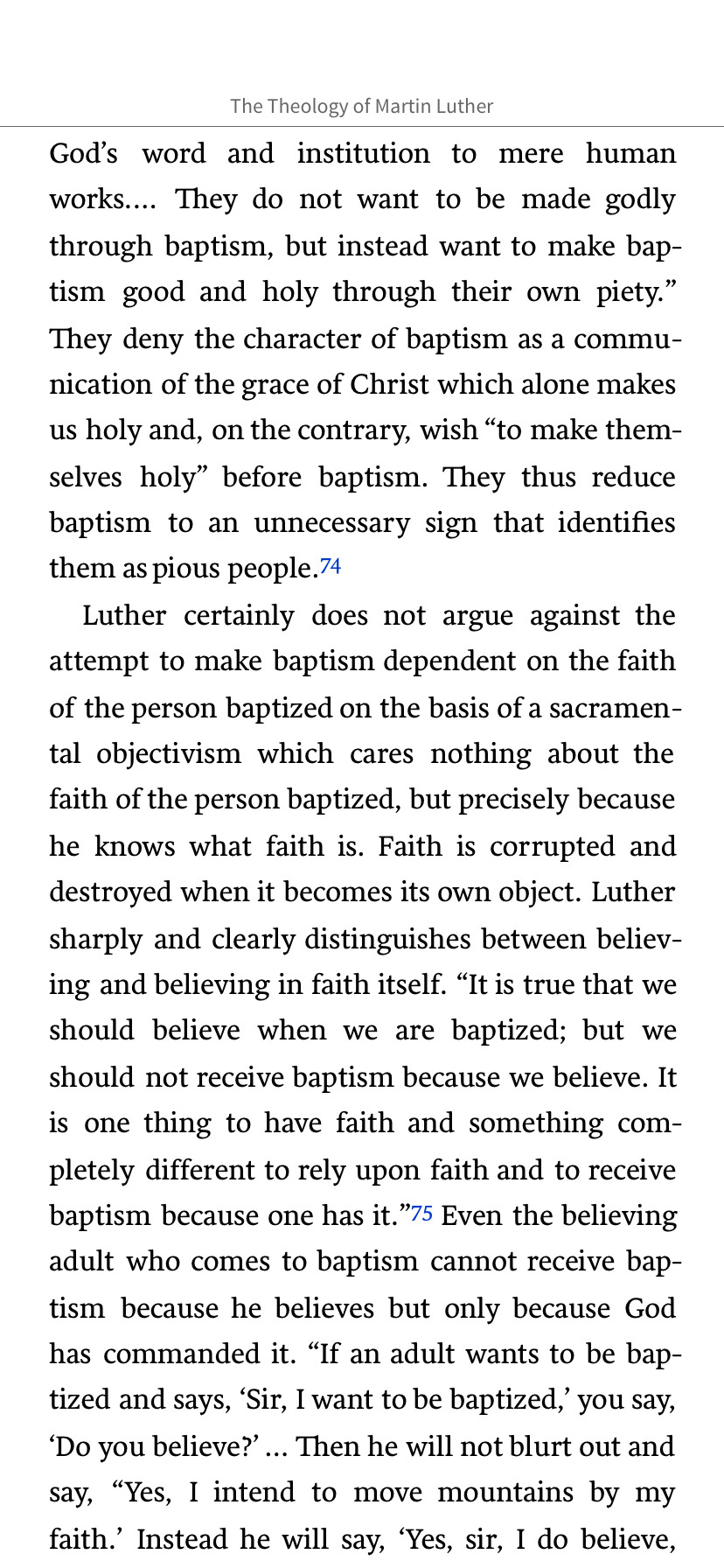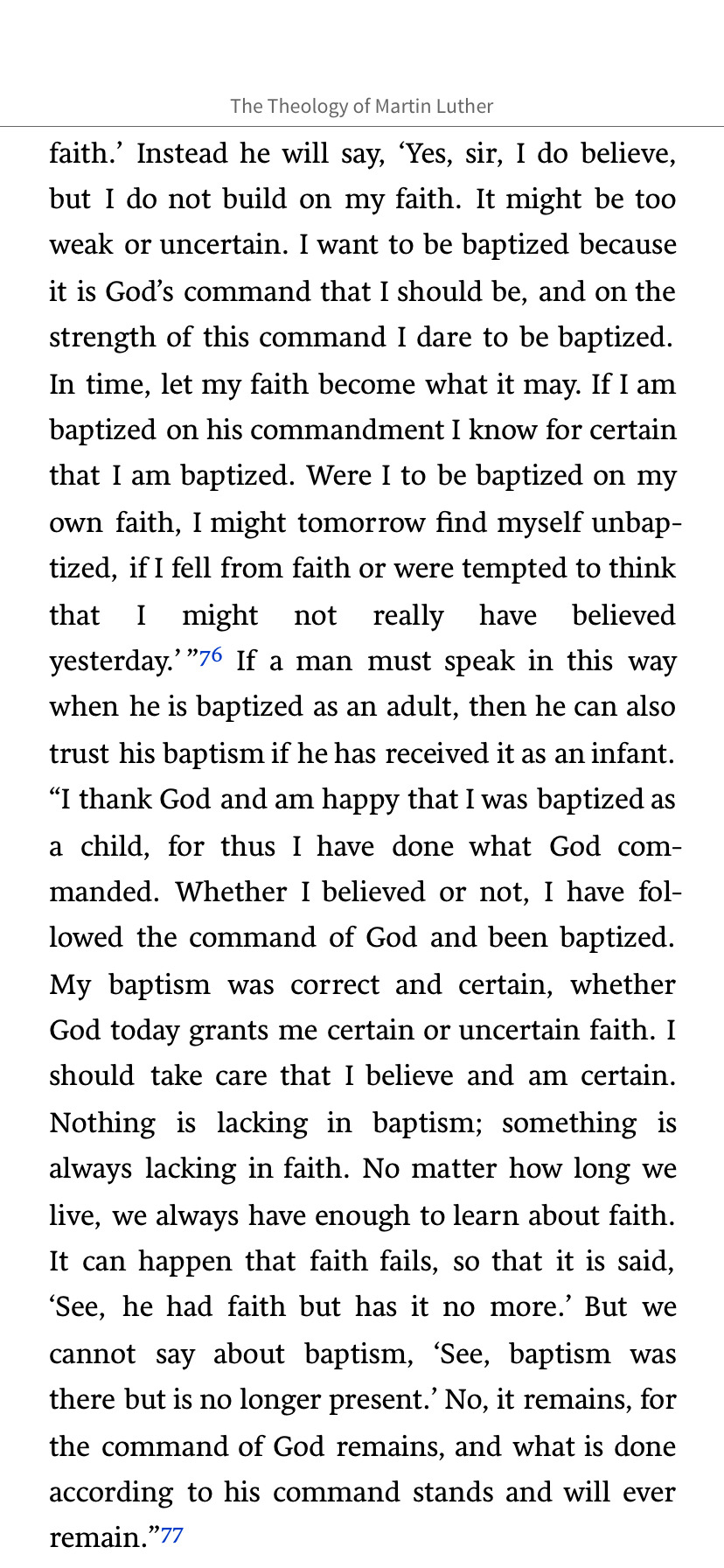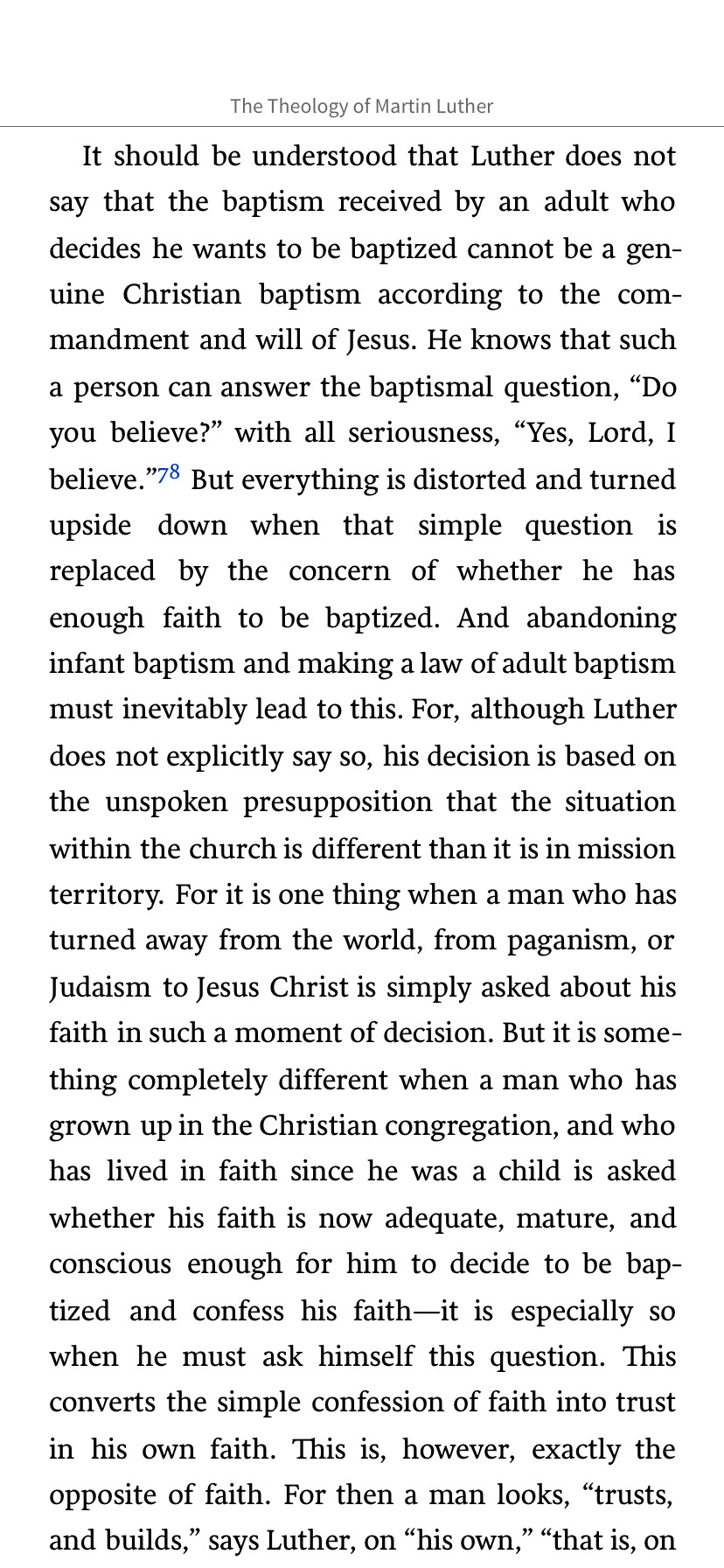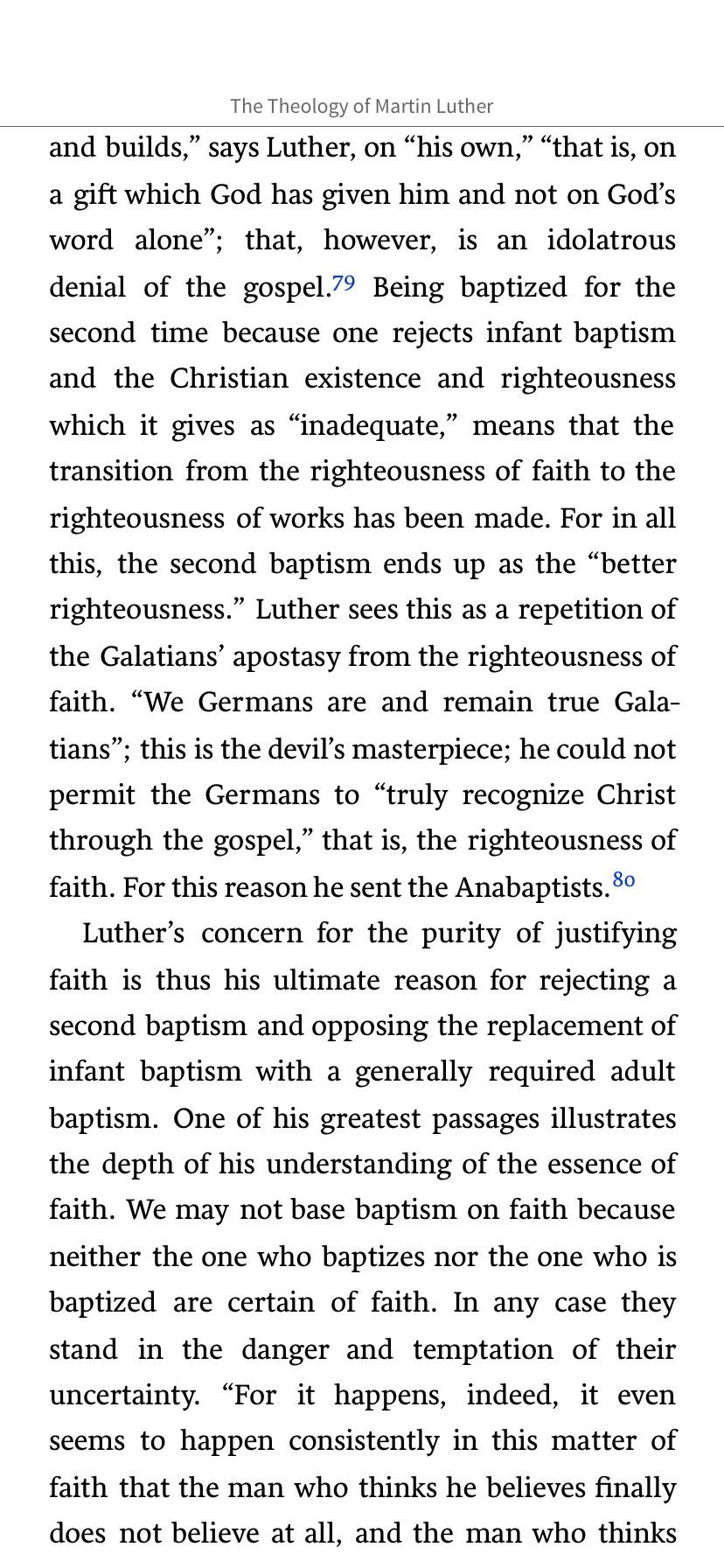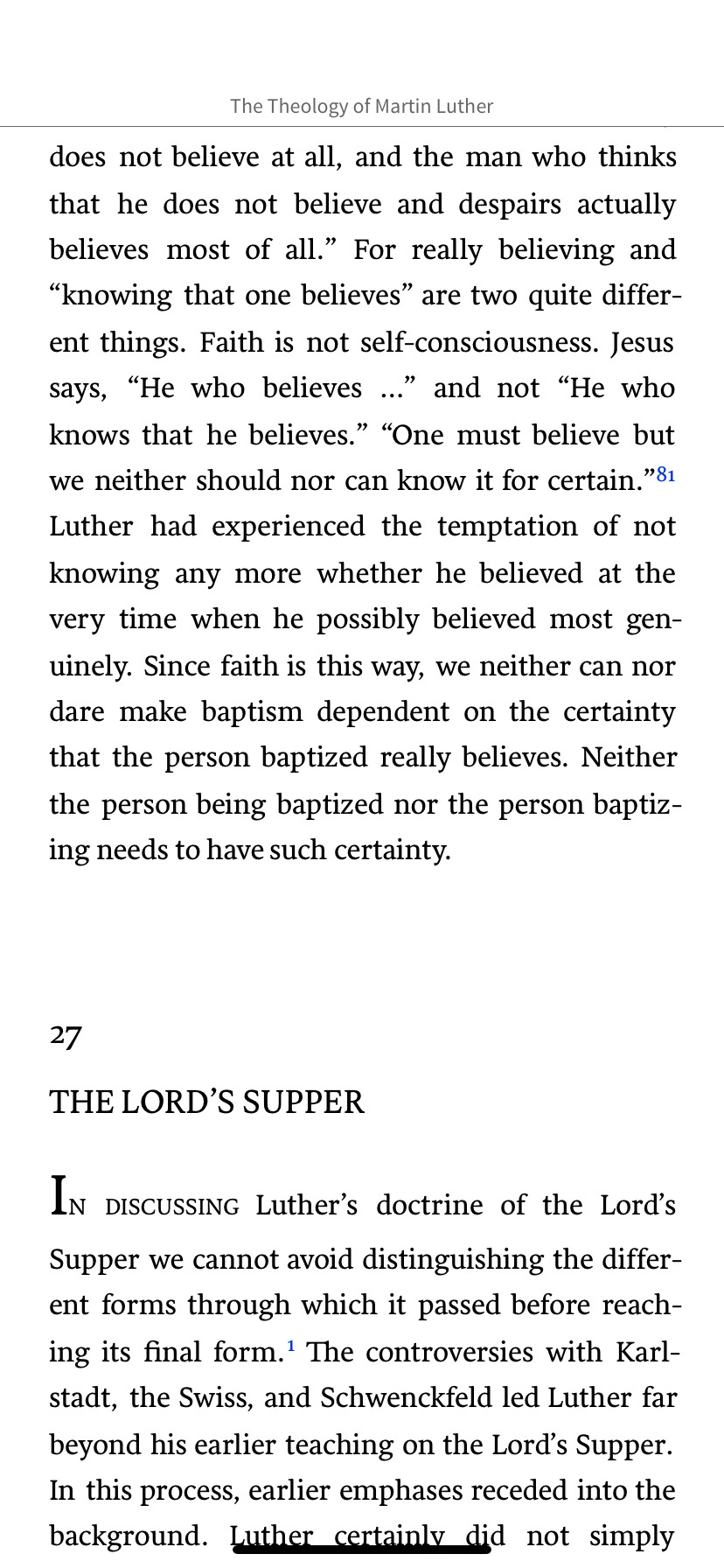
Regarding my previous post on many Protestants treating baptism like a “work,” I mean work in a theologically-loaded “works righteousness” way. I’m thinking of Luther’s objections to the Anabaptists’ views of faith and baptism. See pics for a relevant excerpt from Althaus’s Theology of Luther book.
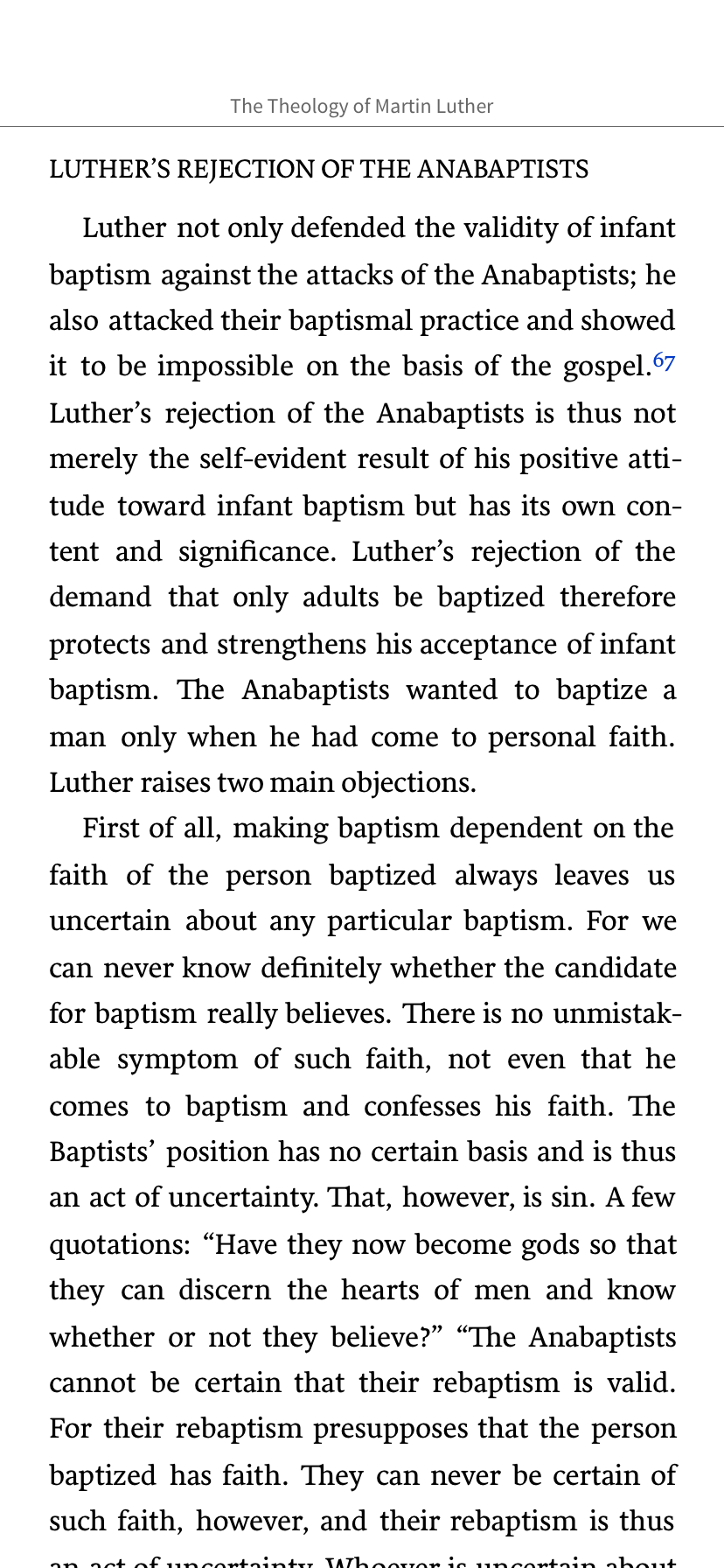
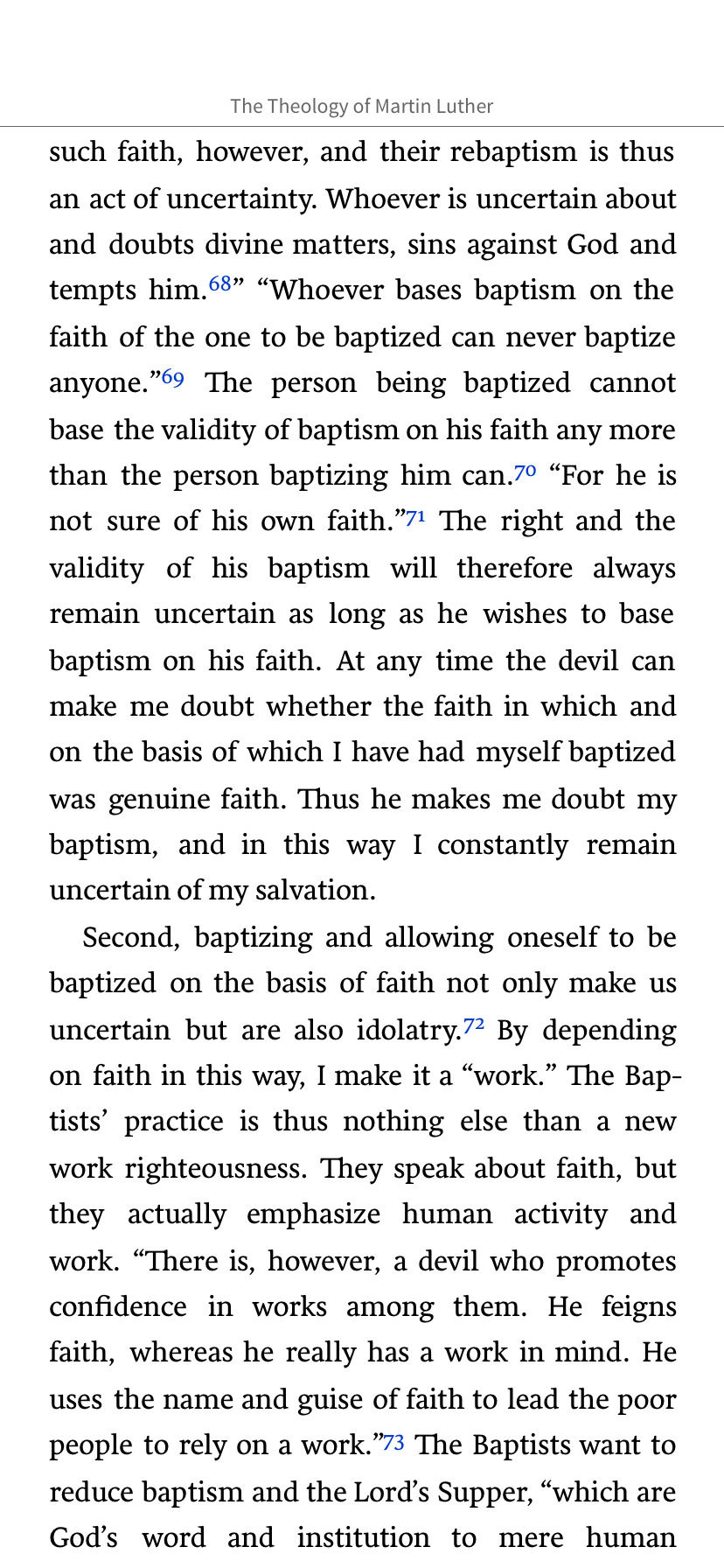
Luther defends infant baptism against the Anabaptists by arguing that baptism dependent on personal faith is uncertain and lacks a firm basis in the gospel.The excerpt discusses the theological view that basing baptism on personal faith leads to uncertainty and idolatry, emphasizing that baptism's validity should not depend on the faith of either the baptizer or the baptized.The passage discusses Martin Luther's theological perspective on baptism, emphasizing that baptism's holiness comes from Christ's grace rather than human piety or faith, and distinguishes between having faith and relying on it to receive baptism.The text discusses the assurance and significance of baptism based on God's command rather than personal faith, emphasizing that baptism remains valid regardless of the fluctuating nature of individual faith.The text explains Martin Luther's view on adult baptism, emphasizing that the faith question should be sincere rather than a judgment of having enough faith to be baptized, and distinguishing the faith context of converts from that of lifelong Christians.The passage discusses Martin Luther's theological stance on infant baptism, rejecting second baptism and emphasizing faith's righteousness over works, while warning against the uncertainty of faith in baptism practices.The text explores the nature of faith and belief according to Martin Luther, emphasizing that certainty in belief is not necessary for baptism and introduces a discussion on Luther's doctrine of the Lord's Supper.